What is Dyslexia?
“Dyslexia is a specific learning disability characterized by difficulties in word reading and/or spelling that involve accuracy, speed, or both and vary depending on the orthography. These difficulties occur along a continuum of severity and persist even with instruction that is effective for the individual’s peers. The causes of dyslexia are complex and involve combinations of genetic, neurobiological, and environmental influences that interact throughout development. Underlying difficulties with phonological and morphological processing are common but not universal, and early oral language weaknesses often foreshadow literacy challenges. Secondary consequences include reading comprehension problems and reduced reading and writing experience that can impede growth in language, knowledge, written expression, and overall academic achievement. Psychological well-being and employment opportunities also may be affected. Although identification and targeted instruction are important at any age, language and literacy support before and during the early years of education is particularly effective.”
[Adopted by the IDA Board of Directors on October 22, 2025. For more detailed context, please visit the 2025 IDA Definition Explanation, which includes the IDA Definition Presentation. The 2002 Definition Consensus Project remains available as a historical reference.]
Studies show that individuals with dyslexia process information in a different area of the brain than do non-dyslexics. Check out this video:
Here are a few informative websites that describe the signs of dyslexia:
- International Dyslexia Association
- National Center for Learning Disabilities
- Susan Barton, Bright Solutions for Dyslexia
- Sally Shawitz, Yale Center for Dyslexia & Creativity
Typically the signs of dyslexia are right beneath the surface.
This graphic shows the hidden disability: Dyslexia.
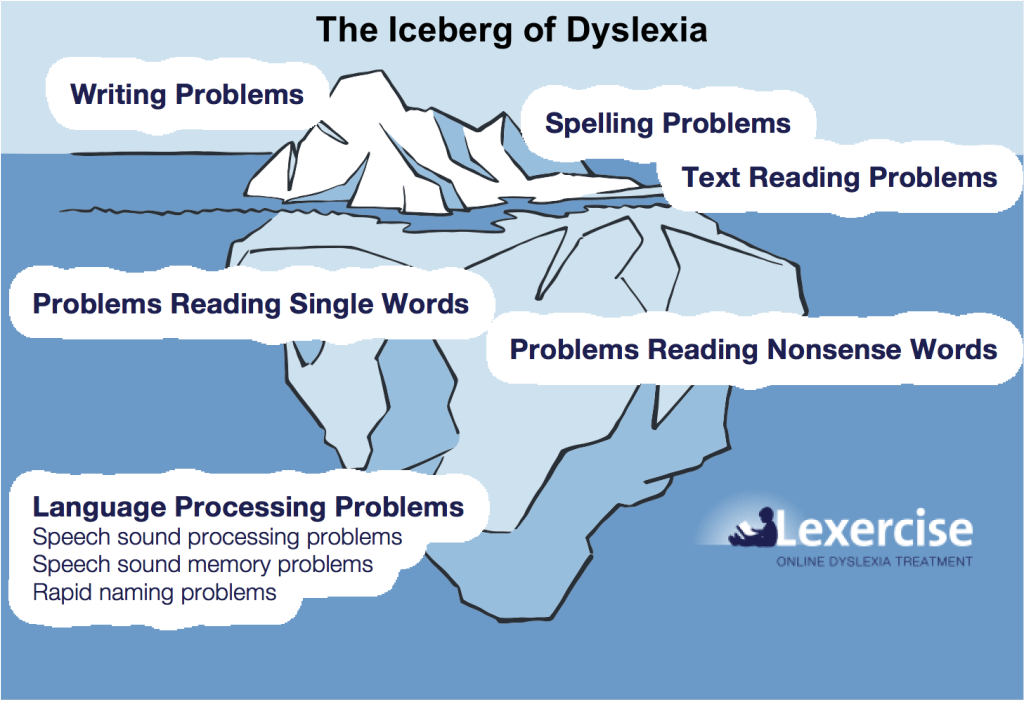
Credit: Lexercise, creator of a free online dyslexia test.